Business // Strategy
Business and strategy work is about understanding how decisions ripple across systems. It requires balancing long-term goals with immediate constraints, aligning stakeholders with different priorities, and making thoughtful trade-offs when there’s no perfect answer. My interest in this space comes from working through complex problems where clarity, context, and reasoning matter just as much as execution.
Through coursework and hands-on experience, I’ve focused on how organizations use strategy to guide decisions around technology, operations, and growth. I’m particularly drawn to work that sits between planning and action—where analysis informs direction, and strategy becomes something teams can actually use. These projects reflect how I approach decision-making: grounded in context, informed by data when possible, and always aware of the human and organizational factors at play.
AI-Enabled Global Expansion Strategy for LYNX PowerPace
Overview
This case study evaluates international expansion opportunities for an AI-enabled medical device, using a multi-dimensional readiness framework that balances digital infrastructure, governance, interoperability, trust, and AI ecosystem strength. The analysis was developed as part of an MBA Information Systems Strategy course and reflects a consulting-style approach to market entry decision-making.
Strategic Problem
LYNX’s PowerPace AI pacemaker relies on continuous connectivity, cloud infrastructure, regulatory approval, and provider trust. Unlike traditional medical devices, market entry depends not only on demand, but on whether national digital and AI ecosystems can support safe, scalable deployment.
The core strategic question was: Which countries are ready for immediate expansion, which require partnerships, and which pose excessive risk?
Methodology & Framework
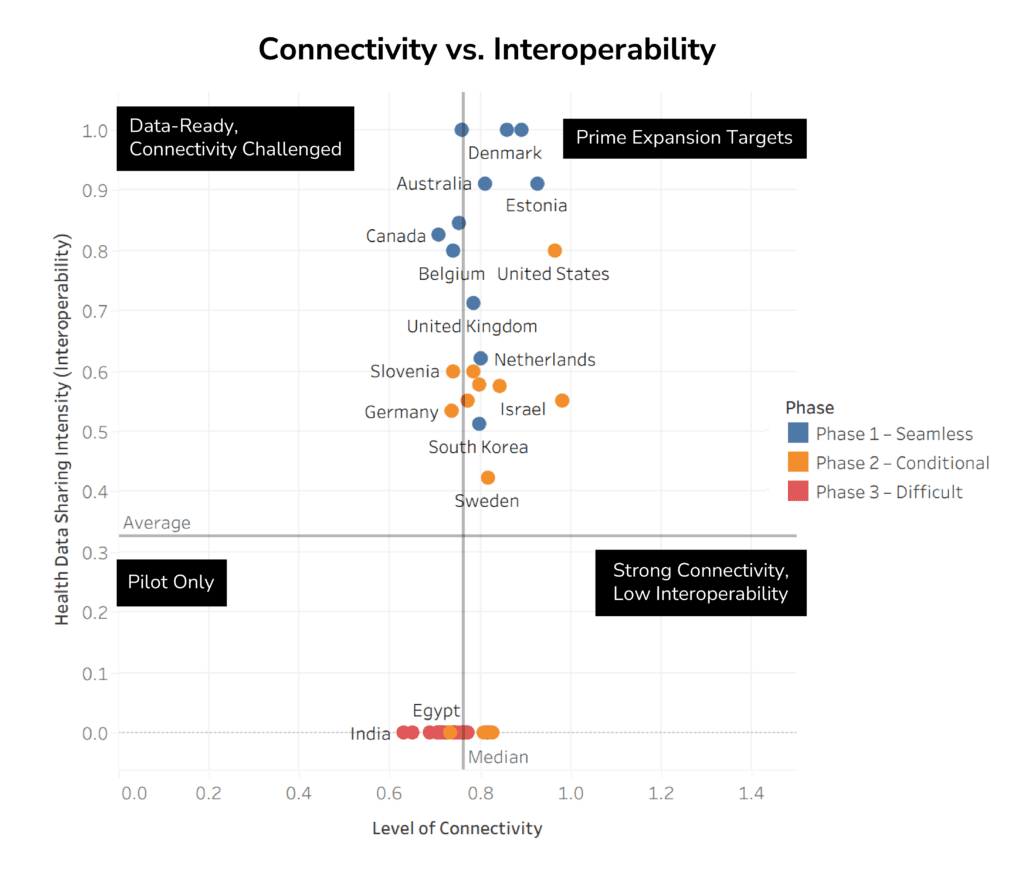
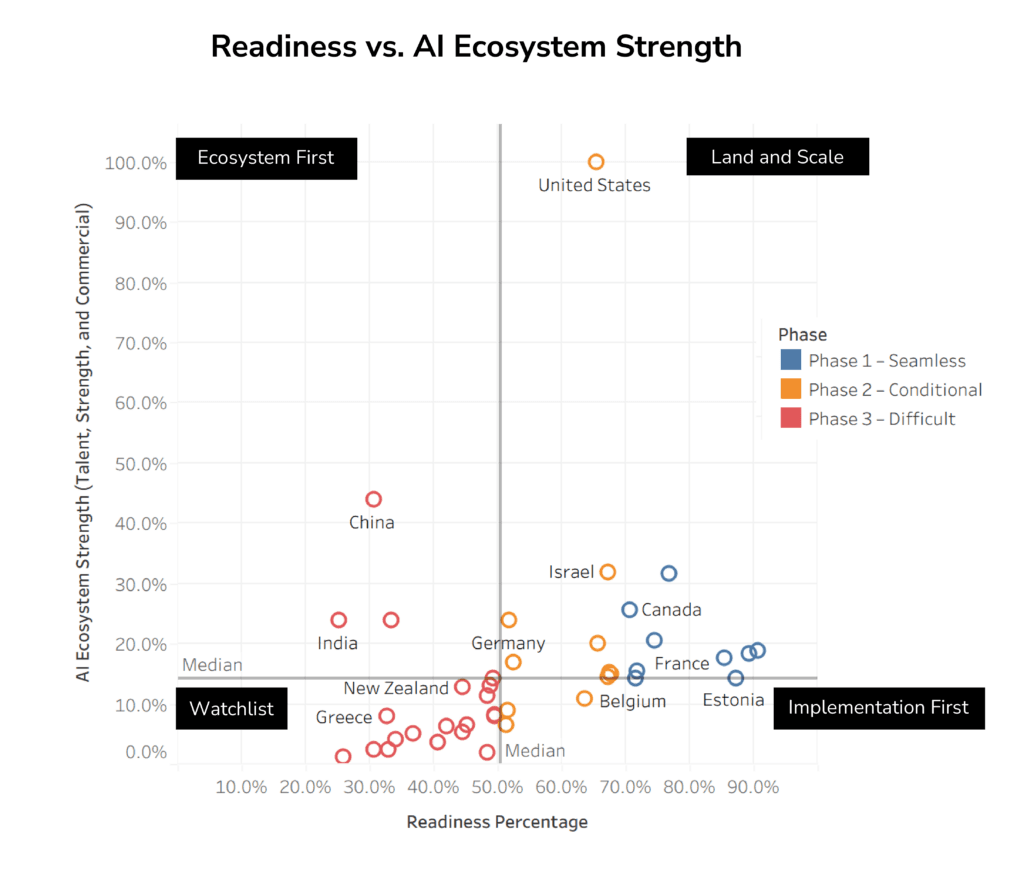
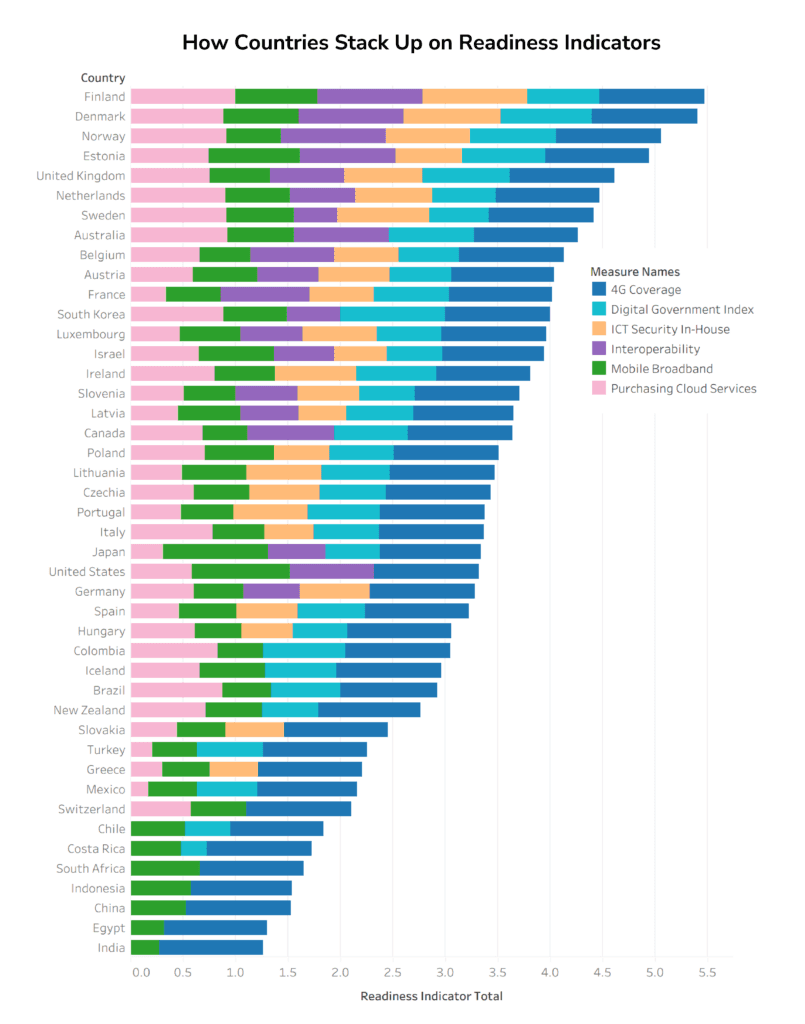
I developed a weighted readiness framework using OECD digital indicators and the Global AI Index, combining connectivity, interoperability, digital governance, cybersecurity maturity, cloud adoption, and AI ecosystem strength. Indicators were weighted based on their relevance to AI-enabled medical devices, recognizing that infrastructure alone is insufficient without governance and trust.
Visual Analysis
Tableau was used to visualize multi-dimensional readiness and surface trade-offs across markets, supporting comparative analysis rather than serving as an end in itself.
Key Insights
- High connectivity does not guarantee readiness without governance and interoperability
- Phase 1 markets (e.g., Denmark, Finland, Estonia) combine infrastructure with trust and digital maturity
- Phase 2 markets require partnerships to mitigate governance or interoperability gaps
- AI ecosystem strength enables co-innovation, not just deployment
Recommendations
Based on the analysis, I recommended a phased expansion strategy: immediate entry into high-readiness markets, partnership-led entry in conditional markets, and pilot-only approaches in high-risk environments. The recommendations emphasized sequencing, trust-building, and ecosystem orchestration rather than rapid scale alone.
Full strategic report available upon request.
Strategic Prioritization Under Constraint at IndigiGenius
Overview
This case study examines how a growing nonprofit organization navigated strategic prioritization amid limited resources, unclear governance, and competing stakeholder priorities. The work reflects my experience supporting decision-making and execution in an environment where structure was still emerging and trade-offs were unavoidable.
Strategic Problem
IndigiGenius operates multiple programs with distinct audiences, funding needs, and external partners. As the organization expanded, decisions around where to focus visibility, effort, and resources became increasingly complex—especially in the absence of formal prioritization frameworks or centralized governance.
The core strategic question was: How do you prioritize initiatives and messaging when an organization is growing quickly, resources are constrained, and stakeholders hold different views on strategy?
Context & Constraints
- Small team, high expectations
- Rapid program growth
- Board involvement with varying perspectives
- Limited budget and capacity
- No formal PMO or prioritization framework
Strategic decisions were shaped less by ideal planning conditions and more by practical constraints, including limited staff capacity, evolving leadership structures, and the need to balance mission alignment with external expectations.
Approach
Rather than introducing formal models, I focused on creating clarity through structured thinking—identifying competing priorities, mapping initiatives to audiences and goals, and highlighting where effort and impact were misaligned. The goal was not to dictate strategy, but to make decision points explicit so leadership could engage with them more effectively.
Key Insights
- Not all programs benefited equally from increased visibility
- Messaging complexity increased as programs scaled without shared narrative
- Resource allocation decisions were often reactive rather than intentional
- Lack of prioritization created downstream execution friction
Recommendations
The analysis pointed toward the need for clearer prioritization across initiatives, shared criteria for allocating effort, and improved visibility into how strategic decisions translated into execution. Even lightweight frameworks—when aligned with organizational values—could reduce friction and support more intentional growth.
Outcome
While constraints remained, this work helped surface important strategic questions around focus, capacity, and alignment. It reinforced the value of making trade-offs visible, even when decisions are ultimately shaped by factors beyond formal analysis.